Sunny weather brings joy to many, but last year was the sixth hottest on record, undoubtedly a consequence of climate change. Aside from looking for the best business electricity rates, it is paramount to consider how your behaviours are impacting the environment.
A change in weather patterns is a prime example of global warming. To reveal which countries are most affected by climate change, we have gathered temperature data worldwide, creating a Global Temperature Index.
The effects of climate change on the planet have been observable for decades, but which countries have seen the most significant short-term shift in temperature? Here’s what we found.
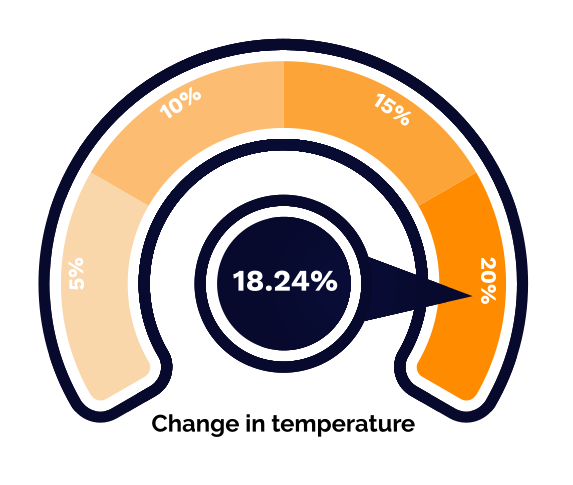
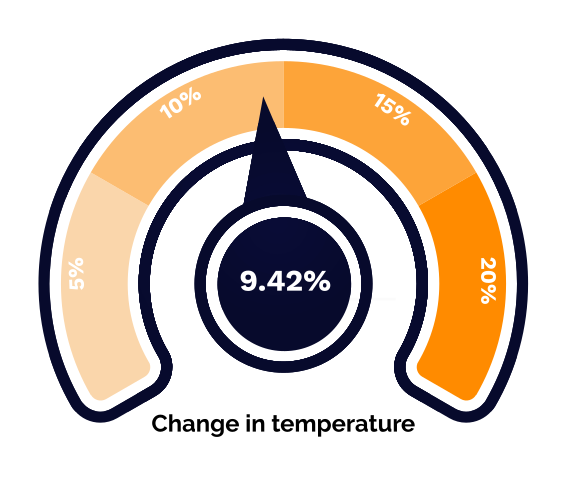
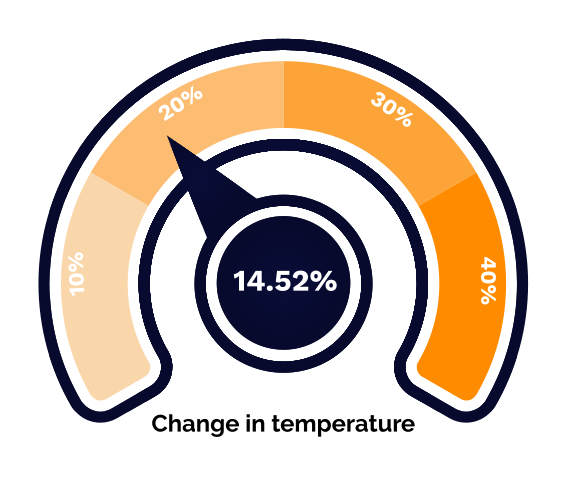
Ankara has seen an 18.24% increase in temperature since 2019 - higher than any other city on our list. The urban areas of Turkey, including Ankara, are guilty of contributing significantly to air pollution levels over the years. Even though this country is taking steps to reduce its harmful emissions, Ankara's first-place entry on our list indicates that the residents here still have a long way to go before they’re rewarded for their efforts.
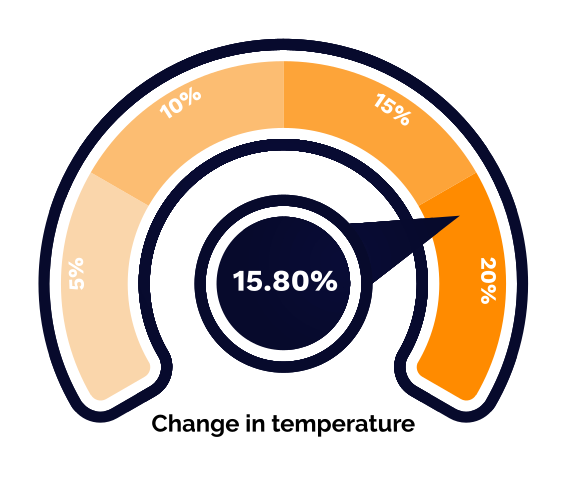
Introducing free public transport in Tallinn may have made travel more economically viable for residents. However, it has contributed to this city's high level of carbon emissions. Activity in Tallinn has led to a 15.80% increase in its average temperature, the second highest of any capital city on our list.
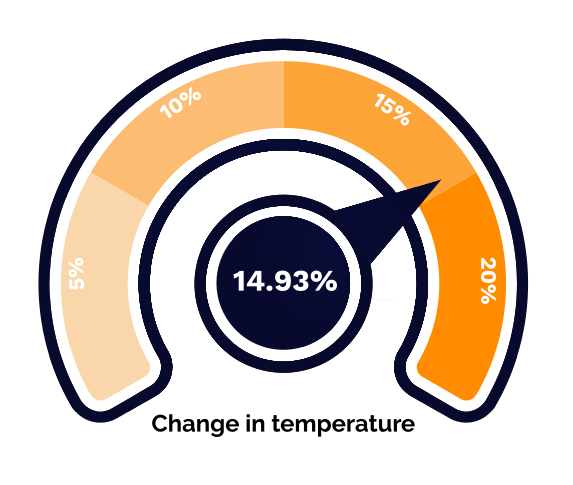
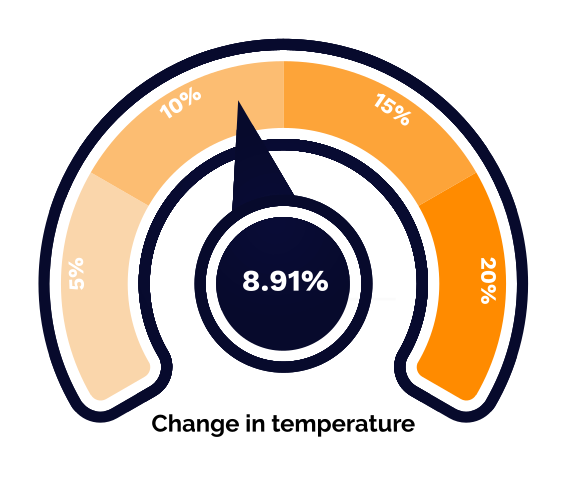
Completing our top three list of the cities with the most significant change in temperature between 2019-2023 is Finland's capital, Helsinki. From an average temperature of 16.4°C in 2019, the heat in Helsinki has increased by 14.93%, where it currently has an average temperature of 18.8°C.
|
Average temperature (°C) |
Change in temperature (%) |
||||
|---|---|---|---|---|---|
|
|
City |
Country |
2023 |
2019 |
|
A lot can happen in a decade, and this is no more apparent than when it comes to the effects of global warming. Below is a list of cities which have seen the most significant change in temperature since 2014.
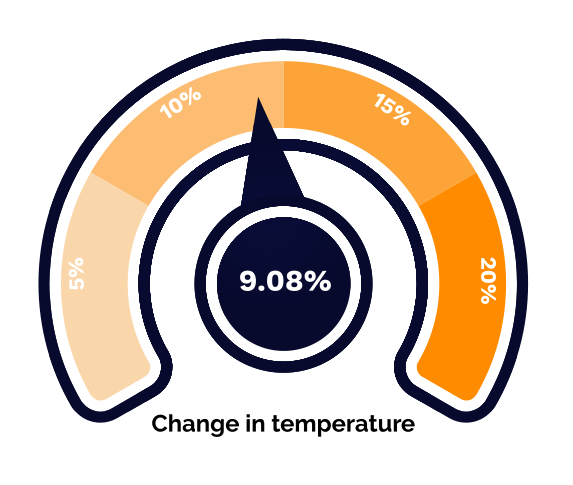
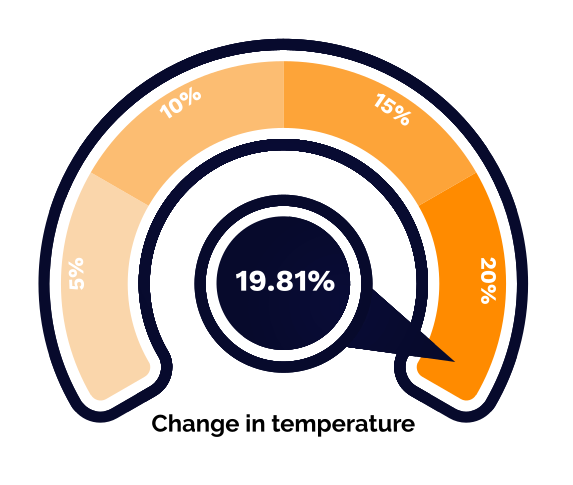
Characterised by cold winters and hot summers, the weather in Seoul goes from one extreme to the other over the space of a year. Unfortunately, the effects of climate change have impacted Seoul more than any other city on our list between 2014-2023, where it has seen an average temperature increase of 19.81%.
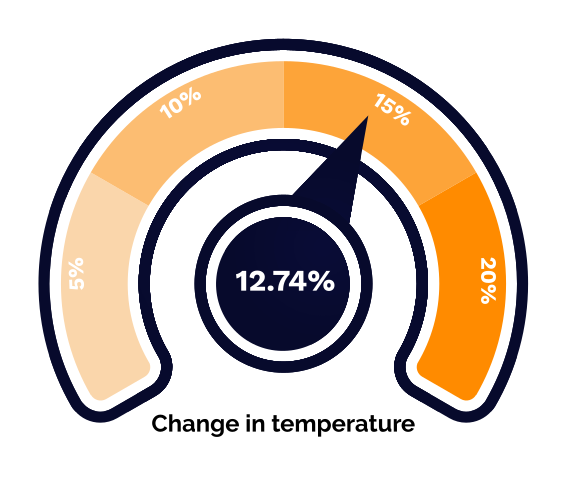
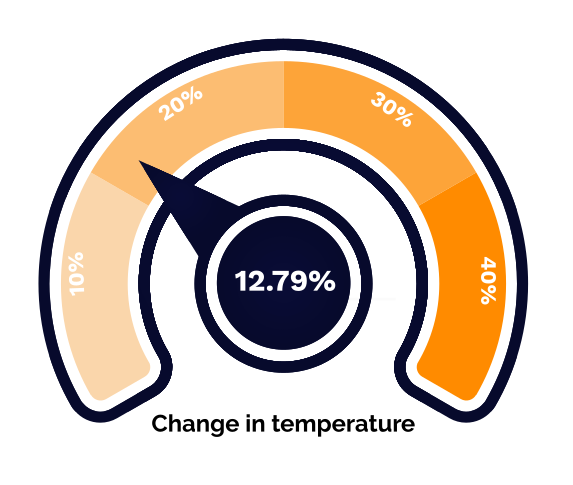
With a 12.74% increase in average temperature since 2014, Canberra is next on our list. Considering that August is the heart of Australia’s winter, it is unsurprising that this country’s capital has the lowest average temperature of all the entries in our top three, averaging just 6.7°C in 2023. Despite this, Canberra has seen the second-highest increase in average temperature since 2014.
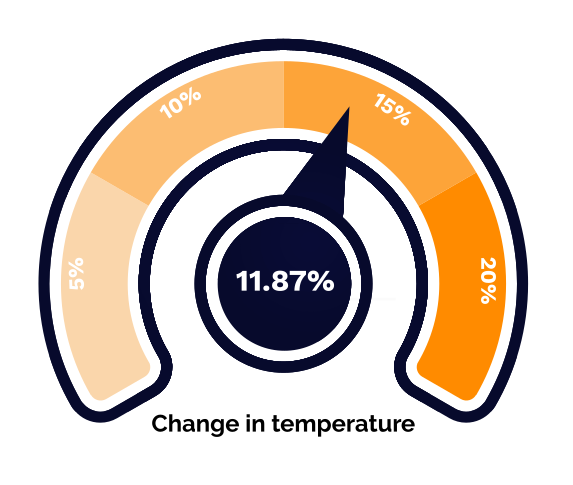
Making its second appearance on our Global Temperature Index is Tallinn, Estonia. Over the last ten years, this city has seen an increase of 11.87% when it comes to its average temperature. With figures averaging 17.2°C and 19.3°C in 2014 and 2023, respectively, summertime in Tallinn is getting hotter, resulting from climate change.
|
Average temperature (°C) |
Change in temperature (%) |
||||
|---|---|---|---|---|---|
|
|
City |
Country |
2023 |
2014 |
|
Scientists have predicted that 2023 could be the hottest year on record, and with the global average temperature increasing by over two degrees between 2004-2023, it indicates that we have not been doing enough to save our planet. The following list reveals the cities which have seen the most significant increase in temperature since 2004.
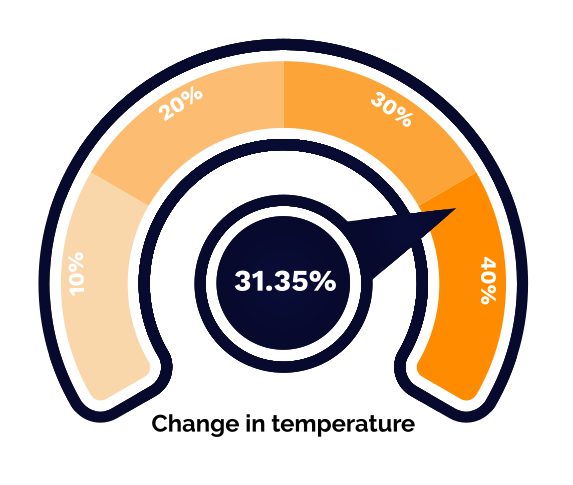
With an average August temperature of 18.8°C as of 2023, Ottawa's summers may not be the warmest in the world, but that doesn't mean that this city hasn't been impacted by climate change. Over the last 19 years, Canada's capital has seen a 31.35% increase in its average temperature which is more than any other city on our list.
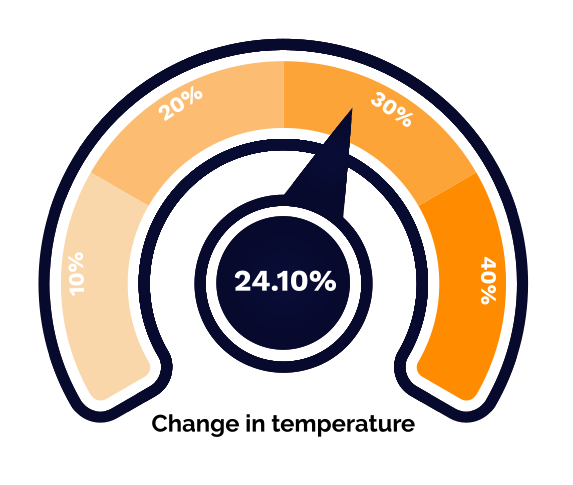
The average temperature in Ankara has increased by over five degrees since 2004, an increase of 24.10%. Whilst that may not sound like a drastic temperature change, the effects of global warming across Turkey have made this country more vulnerable to extreme weather, from flooding to wildfires.
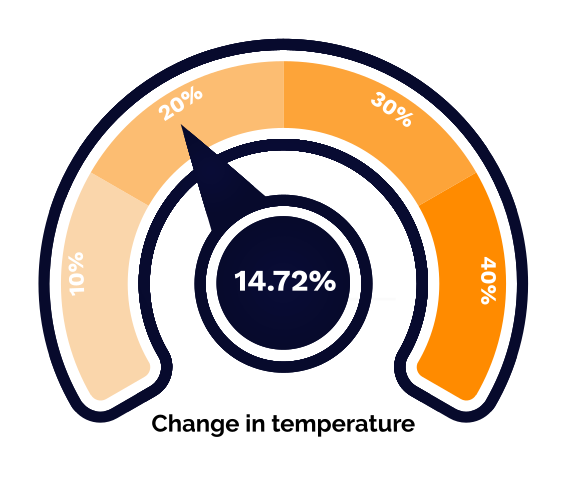
Instead of sticking with old traditions, Santiago is learning from its mistakes by trying to rectify the 14.72% increase in average temperature. To reduce its carbon footprint in future years, Chile aims to reduce CO2 emissions by 2030 by endorsing renewable sources and launching a reforestation project, among other things.
|
Average temperature (°C) |
Change in temperature (%) |
||||
|---|---|---|---|---|---|
|
|
City |
Country |
2023 |
2004 |
|
With the effects of climate change having visible ramifications on the planet, it is now more important than ever to take action. There is so much information out there; we understand this can make living sustainably daunting. Because of this, we have put together a series of expert tips to help you become more environmentally friendly.
We are all guilty of wasting food in one way or another, but next time you are about to throw away your leftovers, you should consider a compost bin. As well as reducing greenhouse gas emissions, compost has health benefits for soil and can help promote plant growth.
Aside from adding character to a room, houseplants are the perfect feature for those trying to be more eco-friendly. Whilst some varieties of greenery can provide unique benefits for the environment, having plants in your home can help to purify the air and absorb toxins, like carbon monoxide, which contribute to global warming.
If you are searching for an easy way to do your bit for the environment, look no further than reusable items. From labourer's time to materials and the environment, reusable packaging can save in many ways. If you are looking for inspiration, a few common reusables include plastic food containers, straws, and shopping bags.
Smart meters are used to monitor energy consumption, and their accuracy is just one of the reasons why many business energy suppliers favour them. By only paying for the energy you use, smart meters can help encourage environmentally-friendly behaviours, helping you reduce your carbon footprint and save money on your bills.
Although travelling by air is convenient, this mode of transport is unsustainable - particularly for short journeys. If you cannot walk or cycle and want to reduce your carbon footprint, rail is the most environmentally-safe option. Alternatively, road travel can be reasonably eco-friendly if travelling in a low-emission vehicle or using a park-and-ride service.
We made a list of all OECD countries and used their capital cities as the seeding list.
We used Weather Underground to find the average temperature in each city for August for the following years; 2023, 2019, 2014, and 2004 (data collected on 04/08/2023).
We subtracted the 2023 average temperature from the average temperature in 2019 before dividing this by the 2019 figure to calculate the percentage change in temperature over the last five years for each country. This calculation was repeated for the 2014 and 2004 figures to find the change in temperature over the previous ten and twenty years, respectively.